Mascots for Events October 10, 2026
A mascot costume starts with an idea, but turning that idea into a character someone can wear takes careful planning. The design needs to represent your organisation, suit your audience and work in the places where you intend to use it.
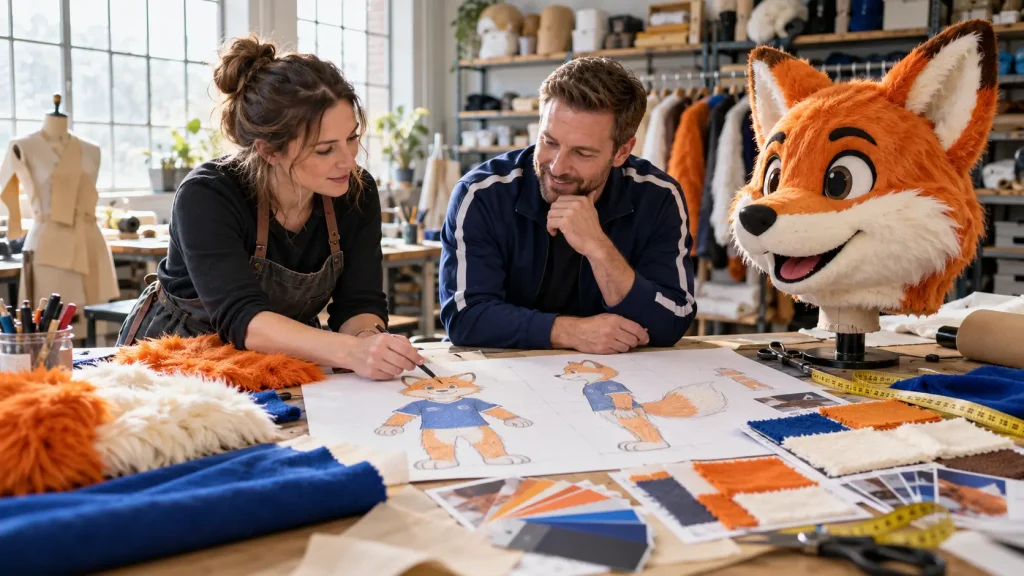
To design your own mascot costume, start by preparing a brief that explains the character, its purpose, your brand colours, who will wear it and when you need it. You do not need professional artwork before speaking to a mascot maker. A rough sketch, an existing logo or a clear description can provide a useful starting point.
This guide explains what to include in your brief and which decisions are worth making before production begins.
Before choosing an animal, outfit or facial expression, consider how the mascot will be used.
A football club might need a character that can greet supporters, pose for photographs and move around the touchline. A business could want a recognisable figure for exhibitions and product launches. A school might use its mascot at open days, assemblies and fundraising events.
Write down the main purpose in one sentence. For example:
“Our mascot will represent our junior football club at home matches, school visits and community events.”
Then describe the activities it will need to perform. Will the wearer wave, climb steps, hold promotional items or take part in simple games? These details give the designer something practical to work towards.
Also explain whether appearances will take place indoors, outdoors or across both settings.
Your mascot should have a clear connection to your brand, club or organisation.
That connection could come from an existing logo, a local symbol, a team nickname or a character already used in your marketing. If you are starting from scratch, think about the impression you want the mascot to create.
Choose two or three personality traits, such as friendly, energetic or cheeky. These help guide decisions about the eyes, mouth, posture and overall shape.
Be specific about your audience. A character designed to welcome young children may need a different expression from one intended to energise adult supporters.
For a closer look at how recognisability, personality and movement work together, read our guide to what makes a mascot costume great.
You do not need to produce a finished costume design yourself. Your job at this stage is to explain the idea clearly enough for a designer to develop it.
Useful reference materials include:
If your mascot already exists as an illustration, identify its most recognisable details. These might be distinctive ears, a particular hairstyle, a striped shirt or an unusual silhouette.
A flat illustration will usually need interpretation when it becomes a three-dimensional costume. Very thin limbs, oversized accessories or tiny facial details may need adjusting to make the finished character practical to wear.
You can browse our mascot costume portfolio to explore different character shapes and styles. Use references to explain what appeals to you while developing an identity of your own.
Descriptions such as “bright blue” or “dark green” leave room for interpretation. Supply your brand colour references where you have them, and ask how those colours will be matched across the proposed materials.
Fabric, fur and printed panels can have different finishes, so colour choices should be reviewed alongside material samples or the maker’s recommended approval process.
Your brief should also explain:
For example, a sports club expecting regular kit changes should raise this early. Ask which parts of the proposed costume could be updated separately and how that would affect its construction.
Keep branding easy to recognise. Small lettering or several competing logos may become difficult to read when the character is moving or photographed from a distance.
A mascot needs to work for the person inside it.
Tell your maker whether one regular performer or several people will wear the costume. Provide the measurements they request, along with the expected range of wearer heights if the costume will be shared.
Describe the movements required and ask how the proposed design will accommodate them. Useful questions include:
An appealing drawing does not answer these questions on its own. Discuss practical requirements before approving the final appearance, particularly if the character has a large head, broad body or prominent accessories.
Ask the maker for guidance on suitable use, breaks and performer support for the finished costume.
A budget helps your mascot maker recommend a realistic approach to the design.
If you have a spending limit, explain it at the start. It can help the team assess details such as character complexity, clothing, accessories and any additional requirements.
Separate essential features from optional extras. Your character’s distinctive face might be essential, while a second outfit could be something to consider later.
For more information about the factors that influence a quotation, read our custom mascot costume cost guide.
Give the maker your required delivery date and the date of the first planned appearance. Leave time between delivery and that appearance for checking the costume, trying it on and becoming familiar with it.
Ask for a project schedule that includes design development, approvals, production and delivery. Avoid assuming that production can begin immediately after your first enquiry.
Choose one person to collect feedback from everyone involved in the project.
A mascot design can become difficult to manage when different departments, committee members or sponsors send conflicting instructions. Consolidating comments helps the maker understand which changes have been agreed.
Before approving artwork, check the character from every available angle. Review the colours, expression, clothing, logo placement and any practical adjustments discussed with the maker.
Ask what each approval covers and when changes could affect the price or schedule.
Our mascot creation process explains how initial ideas develop into artwork and decisions about colours, fabrics and character details.
Use the following checklist to organise your first enquiry:
| Brief detail | What to include |
|---|---|
| Organisation | Your business, club, school or charity name |
| Purpose | What the mascot should help you achieve |
| Audience | Who the character will interact with |
| Character | Your concept and its main personality traits |
| References | Logos, sketches, brand guidelines and visual examples |
| Appearance | Colours, clothing, expression and essential features |
| Activities | Movements and interactions the costume must support |
| Wearers | Number of performers and requested measurements |
| Budget | Your working budget and optional extras |
| Timing | Required delivery date and first appearance |
| Approval contact | The person responsible for consolidated feedback |
A useful brief gives your mascot maker a clear understanding of the character and how it needs to work. It also leaves room for practical design advice before decisions are finalised.
Whether you have an established brand character or an early sketch, Premier Mascots can help you explore the next steps.
Contact our team to discuss your custom mascot costume and share your ideas, references and project requirements.
Work with us to design a mascot that truly represents your brand. From the first sketch to the
final creation, we’re here to guide you every step of the way.