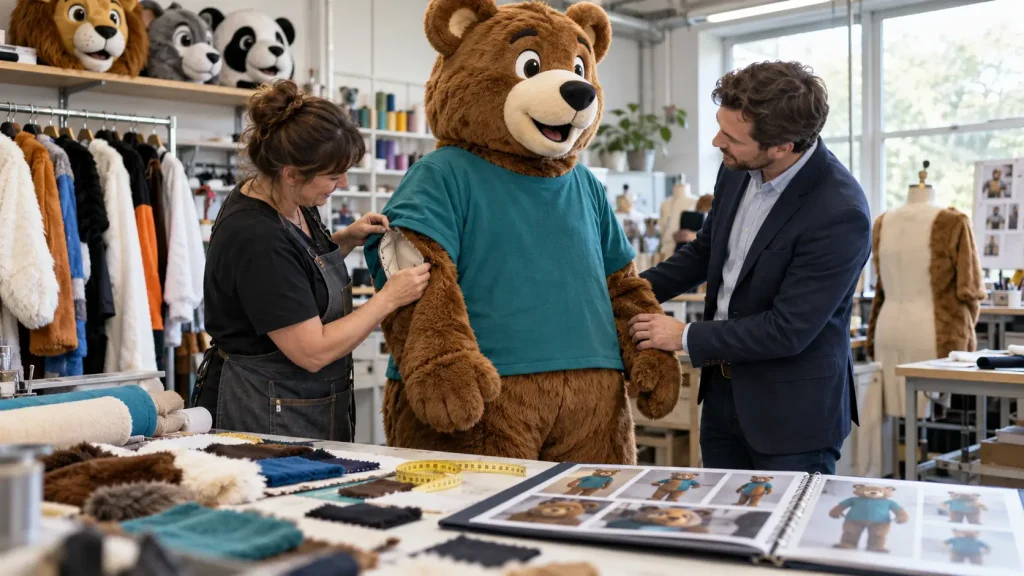
Choosing a mascot maker is an important part of creating a character that represents your organisation. The finished costume needs to look right, work for the person wearing it and suit the events where it will appear.
When comparing mascot makers in the UK, look beyond the initial quotation. Ask about relevant examples, the design approval process, performer fit, delivery times and what happens if the costume needs attention later. Clear answers will help you understand what you are buying and how each supplier will manage your project.
Whether you are ordering for a business, sports club, school or charity, these ten questions will help you assess your options before committing.
A portfolio helps you judge whether a maker can turn different ideas into convincing, wearable characters. Look for projects with requirements similar to yours, such as a sports mascot designed for regular appearances or a brand character that needs to closely match existing artwork.
Ask to see photographs of completed costumes, including different angles and close-up details. Where available, videos can help you understand how a costume moves and how its proportions look when someone is wearing it.
Pay attention to the consistency between the original concept and the finished character. Does the expression match? Are the colours and clothing recognisable? Do the feet, hands and head work together?
You can explore our mascot costume portfolio for examples of different character styles and designs.
Some customers arrive with a complete character design. Others have a logo, a sketch or an early idea. Explain which stage you are at and ask exactly how the maker will help develop it.
Find out what you will receive before production begins. This might include concept artwork, different views of the character, material references or a three-dimensional visual. Ask which of these are included in the quotation.
It is also useful to discuss how the maker will adapt a flat illustration into a wearable costume. A feature that looks effective on a screen may need adjusting to give the performer enough room or make the character easier to move.
Our mascot creation process outlines the stages from discussing your ideas to reviewing artwork and selecting character details.
Before placing an order, establish how you will review the design and request changes.
Ask how many revision rounds are included, who will receive your feedback and what happens if you change your mind after approving the artwork. A clear process helps prevent misunderstandings about which version is being produced.
Check what you are approving at each stage. An initial concept approval may be different from signing off colours, fabrics, dimensions or the final production design.
Within your organisation, appoint one person to collect comments and send agreed feedback. This is especially useful when a committee, marketing team or sponsor needs to contribute.
A mascot costume should be planned around the people who will wear it. Tell the maker whether you have one regular performer or several people sharing the role.
Ask which measurements are needed and what range of wearer sizes the proposed design can accommodate. Avoid assuming that a costume described as an adult size will work equally well for everyone.
Discuss visibility, head support, hand movement, footwear and how the wearer will get into and out of the costume. If your mascot needs to climb steps, carry lightweight promotional items or take part in routines, explain those activities before the design is finalised.
Request guidance on ventilation, breaks and performer support appropriate to the finished costume and its intended use.
Explain how often your mascot will appear and the conditions it is likely to encounter. Occasional indoor exhibitions and regular outdoor matchdays can place different demands on a costume.
Ask why particular materials have been recommended and how they affect weight, appearance, cleaning and maintenance. Discuss areas likely to receive frequent wear, such as the feet, hands, fastening points and clothing.
Find out whether parts can be removed for cleaning or replaced separately if they become worn. If your organisation changes its branding or kit regularly, ask whether those elements can be updated without replacing the whole costume.
Our article on what makes a mascot costume great explores how appearance, brand identity and movement contribute to the finished character.
Two mascot quotations are only comparable when they cover the same requirements. A lower headline price may reflect a different design, fewer accessories or a narrower service.
Ask for written confirmation of:
For a fuller explanation of the factors behind a quotation, read our custom mascot costume cost guide.
Ask whether the quoted lead time begins when you enquire, pay a deposit or approve the final design. This distinction matters when you are working towards a fixed event date.
Request a schedule covering design development, your approvals, production and delivery. Check whether shipping time is included and how delays to your feedback could affect the planned completion date.
Allow time after delivery to inspect the costume, check the fit and practise before its first appearance. If you need an urgent order, ask what can realistically be achieved and whether additional charges apply.
A clear schedule gives both sides a shared understanding of the deadline.
When searching for a UK mascot maker, clarify where the business is based, where design and production happen, and who will manage your order.
A UK contact address alone does not explain the manufacturing arrangements. Ask directly if production location is important to your purchasing decision.
Find out who checks the finished costume against the approved design and what you will see before dispatch. Ask whether photographs or other progress updates are provided and how any differences from the agreed brief are handled.
You should also know who is responsible for delivery and whom to contact if the costume arrives with a problem.
A mascot may become a long-term part of your organisation, so discuss its care before ordering.
Ask whether you will receive written cleaning, drying and storage instructions specific to the costume. Different components may need different treatment, so general advice may not cover every part.
Check whether the supplier offers repairs, replacement components or alterations, and whether these services carry additional charges. Ask what any warranty covers and how problems should be reported.
If the costume will be used regularly, understanding repair arrangements can help you plan around periods when it may be unavailable.
Clear communication makes it easier to manage decisions, deadlines and expectations.
Ask who will handle your questions, how updates will be shared and how you should submit feedback. Find out whether you will keep the same contact from the initial enquiry through to delivery.
Notice how the supplier responds to your brief. Do they ask useful questions about the audience, performers and intended activities? Do they explain practical limitations and give clear answers about the quotation?
A productive early conversation should leave you with a better understanding of both the costume and the work needed to create it.
Once you have spoken to your shortlisted suppliers, compare their responses against one consistent set of requirements. Look at the proposed design, included services, practical suitability, delivery schedule and aftercare alongside the price.
The aim is to choose a maker whose approach fits your project and whose responsibilities are clear before production starts.
At Premier Mascots, the process begins with understanding your ideas and requirements. If you are planning a character for your brand, club, school or charity, contact our team to discuss your mascot project. Share your references, intended use and required date so we can talk through the next steps.
Work with us to design a mascot that truly represents your brand. From the first sketch to the
final creation, we’re here to guide you every step of the way.